Rogues Cosmic Dream Blog


Signup & Login To Post A Blog


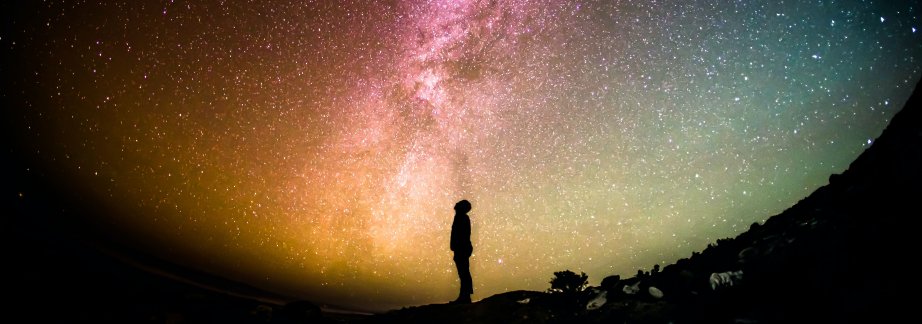
Photo by Greg Rakozy on Unsplash

Jun. 05, 2026 @


Visitors:

QUOTES: The man who graduates today and stops learning tomorrow is uneducated the day after.
Author: Newton D. Baker

« Prev 1 2 3 4 5 6 7
Share Article    
On Oct. 19, 2021 by Admin

INTERSTELLAR TRAVEL

Faster-than-light communications and travel are the conjectural propagation of information or matter faster than the speed of light.

The special theory of relativity implies that only particles with zero rest mass may travel at the speed of light. Tachyons, particles whose speed exceeds that of light, have been hypothesized, but their existence would violate causality, and the consensus of physicists is that they cannot exist. On the other hand, what some physicists refer to as "apparent" or "effective" FTL depends on the hypothesis that unusually distorted regions of spacetime might permit matter to reach distant locations in less time than light could in normal or undistorted spacetime.

According to the current scientific theories, matter is required to travel at slower-than-light speed with respect to the locally distorted spacetime region. Apparent FTL is not excluded by general relativity; however, any apparent FTL physical plausibility is speculative. Examples of apparent FTL proposals are the Alcubierre drive and the traversable wormhole.

(1) The Alcubierre drive, Alcubierre warp drive, or Alcubierre metric (referring to metric tensor) is a speculative idea based on a solution of Einstein's field equations in general relativity as proposed by theoretical physicist Miguel Alcubierre, by which a spacecraft could achieve apparent faster-than-light travel if a configurable energy-density field lower than that of vacuum (that is, negative mass) could be created.

Rather than exceeding the speed of light within a local reference frame, a spacecraft would traverse distances by contracting space in front of it and expanding space behind it, resulting in effective faster-than-light travel. Objects cannot accelerate to the speed of light within normal spacetime; instead, the Alcubierre drive shifts space around an object so that the object would arrive at its destination faster than light would in normal space without breaking any physical laws.

Although the metric proposed by Alcubierre is consistent with the Einstein field equations, construction of such a drive is not necessarily possible. The proposed mechanism of the Alcubierre drive implies a negative energy density and therefore requires exotic matter. So if exotic matter with the correct properties cannot exist, then the drive could not be constructed. At the close of his original article, however, Alcubierre argued (following an argument developed by physicists analyzing traversable wormholes) that the Casimir vacuum between parallel plates could fulfill the negative-energy requirement for the Alcubierre drive.

Another possible issue is that, although the Alcubierre metric is consistent with Einstein's equations, general relativity does not incorporate quantum mechanics. Some physicists have presented arguments to suggest that a theory of quantum gravity (which would incorporate both theories) would eliminate those solutions in general relativity that allow for backwards time travel.

(2) The Casimir effect shows that quantum field theory allows the energy density in certain regions of space to be negative relative to the ordinary matter vacuum energy, and it has been shown theoretically that quantum field theory allows states where energy can be arbitrarily negative at a given point. Many physicists, such as Stephen Hawking, Kip Thorne, and others, argued that such effects might make it possible to stabilize a traversable wormhole. The only known natural process that is theoretically predicted to form a wormhole in the context of general relativity and quantum mechanics was put forth by Leonard Susskind in his ER=EPR conjecture. The quantum foam hypothesis is sometimes used to suggest that tiny wormholes might appear and disappear spontaneously at the Planck scale, and stable versions of such wormholes have been suggested as dark matter candidates. It has also been proposed that, if a tiny wormhole held open by a negative mass cosmic string had appeared around the time of the Big Bang, it could have been inflated to macroscopic size by cosmic inflation.

Lorentzian traversable wormholes would allow travel in both directions from one part of the universe to another part of that same universe very quickly or would allow travel from one universe to another. The possibility of traversable wormholes in general relativity was first demonstrated in a 1973 paper by Homer Ellis and independently in a 1973 paper by K. A. Bronnikov. Ellis analyzed the topology and the geodesics of the Ellis drainhole, showing it to be geodesically complete, horizonless, singularity-free, and fully traversable in both directions. The drainhole is a solution manifold of Einstein's field equations for a vacuum space-time, modified by inclusion of a scalar field minimally coupled to the Ricci tensor with antiorthodox polarity (negative instead of positive). (Ellis specifically rejected referring to the scalar field as 'exotic' because of the antiorthodox coupling, finding arguments for doing so unpersuasive.) The solution depends on two parameters: m, which fixes the strength of its gravitational field, and n, which determines the curvature of its spatial cross sections. When m is set equal to 0, the drainhole's gravitational field vanishes. What is left is the Ellis wormhole, a nongravitating, purely geometric, traversable wormhole.

Kip Thorne and his graduate student Mike Morris, unaware of the 1973 papers by Ellis and Bronnikov, manufactured, and in 1988 published, a duplicate of the Ellis wormhole for use as a tool for teaching general relativity. For this reason, the type of traversable wormhole they proposed, held open by a spherical shell of exotic matter, was from 1988 to 2015 referred to in the literature as a Morris--Thorne wormhole.

Later, other types of traversable wormholes were discovered as allowable solutions to the equations of general relativity, including a variety analyzed in a 1989 paper by Matt Visser, in which a path through the wormhole can be made where the traversing path does not pass through a region of exotic matter. However, in the pure Gauss--Bonnet gravity (a modification to general relativity involving extra spatial dimensions which is sometimes studied in the context of brane cosmology) exotic matter is not needed in order for wormholes to exist--they can exist even with no matter. A type held open by negative mass cosmic strings was put forth by Visser in collaboration with Cramer etc., in which it was proposed that such wormholes could have been naturally created in the early universe.

Wormholes connect two points in spacetime, which means that they would in principle allow travel in time, as well as in space. In 1988, Morris, Thorne and Yurtsever worked out how to convert a wormhole traversing space into one traversing time by accelerating one of its two mouths. However, according to general relativity, it would not be possible to use a wormhole to travel back to a time earlier than when the wormhole was first converted into a time "machine". Until this time it could not have been noticed or have been used.

Credit: Wikipedia

On Dec. 31, 2021 by Admin

NASA\'s James Webb Space Telescope launched at 7:20 a.m. EST Saturday on an Ariane 5 rocket from Europe\'s Spaceport in French Guiana, South America.

A joint effort with ESA (European Space Agency) and the Canadian Space Agency, the Webb observatory is NASA\'s revolutionary flagship mission to seek the light from the first galaxies in the early universe and to explore our own solar system, as well as planets orbiting other stars, called exoplanets.

"The James Webb Space Telescope represents the ambition that NASA and our partners maintain to propel us forward into the future," said NASA Administrator Bill Nelson. "The promise of Webb is not what we know we will discover; it\'s what we don\'t yet understand or can\'t yet fathom about our universe. I can\'t wait to see what it uncovers!"

Ground teams began receiving telemetry data from Webb about five minutes after launch. The Arianespace Ariane 5 rocket performed as expected, separating from the observatory 27 minutes into the flight. The observatory was released at an altitude of approximately 75 miles (120 kilometers). Approximately 30 minutes after launch, Webb unfolded its solar array, and mission managers confirmed that the solar array was providing power to the observatory. After solar array deployment, mission operators will establish a communications link with the observatory via the Malindi ground station in Kenya, and ground control at the Space Telescope Science Institute in Baltimore will send the first commands to the spacecraft.

Engineers and ground controllers will conduct the first of three mid-course correction burns about 12 hours and 30 minutes after launch, firing Webb\'s thrusters to maneuver the spacecraft on an optimal trajectory toward its destination in orbit about 1 million miles from Earth.

"I want to congratulate the team on this incredible achievement -- Webb\'s launch marks a significant moment not only for NASA, but for thousands of people worldwide who dedicated their time and talent to this mission over the years," said Thomas Zurbuchen, associate administrator for the Science Mission Directorate at NASA Headquarters in Washington. "Webb\'s scientific promise is now closer than it ever has been. We are poised on the edge of a truly exciting time of discovery, of things we\'ve never before seen or imagined."

The world\'s largest and most complex space science observatory will now begin six months of commissioning in space. At the end of commissioning, Webb will deliver its first images. Webb carries four state-of-the-art science instruments with highly sensitive infrared detectors of unprecedented resolution. Webb will study infrared light from celestial objects with much greater clarity than ever before. The premier mission is the scientific successor to NASA\'s iconic Hubble and Spitzer space telescopes, built to complement and further the scientific discoveries of these and other missions.

"The launch of the Webb Space Telescope is a pivotal moment -- this is just the beginning for the Webb mission," said Gregory L. Robinson, Webb\'s program director at NASA Headquarters. "Now we will watch Webb\'s highly anticipated and critical 29 days on the edge. When the spacecraft unfurls in space, Webb will undergo the most difficult and complex deployment sequence ever attempted in space. Once commissioning is complete, we will see awe-inspiring images that will capture our imagination."

The telescope\'s revolutionary technology will explore every phase of cosmic history -- from within our solar system to the most distant observable galaxies in the early universe, to everything in between. Webb will reveal new and unexpected discoveries and help humanity understand the origins of the universe and our place in it.

NASA Headquarters oversees the mission for the agency\'s Science Mission Directorate. NASA\'s Goddard Space Flight Center in Greenbelt, Maryland, manages Webb for the agency and oversees work on the mission performed by the Space Telescope Science Institute, Northrop Grumman, and other mission partners. In addition to Goddard, several NASA centers contributed to the project, including the agency\'s Johnson Space Center in Houston, Jet Propulsion Laboratory in Southern California, Marshall Space Flight Center in Huntsville, Alabama, Ames Research Center in California\'s Silicon Valley, and others.

Credit: Science Daily

Share Article    
On Jan. 31, 2022 by Admin

Date:January 27, 2022
Source:International Centre for Radio Astronomy Research
Summary: A team mapping radio waves in the universe has discovered something unusual that releases a giant burst of energy three times an hour, and it\'s unlike anything astronomers have seen before. Spinning around in space, the strange object sends out a beam of radiation that crosses our line of sight, and for a minute in every twenty, is one of the brightest radio sources in the sky.

The team who discovered it think it could be a neutron star or a white dwarf -- collapsed cores of stars -- with an ultra-powerful magnetic field.

Spinning around in space, the strange object sends out a beam of radiation that crosses our line of sight, and for a minute in every twenty, is one of the brightest radio sources in the sky.

Astrophysicist Dr Natasha Hurley-Walker, from the Curtin University node of the International Centre for Radio Astronomy Research, led the team that made the discovery.

"This object was appearing and disappearing over a few hours during our observations," she said.

"That was completely unexpected. It was kind of spooky for an astronomer because there\'s nothing known in the sky that does that.

"And it\'s really quite close to us -- about 4000 lightyears away. It\'s in our galactic backyard."

The object was discovered by Curtin University Honours student Tyrone O\'Doherty using the Murchison Widefield Array (MWA) telescope in outback Western Australia and a new technique he developed.

"It\'s exciting that the source I identified last year has turned out to be such a peculiar object," said Mr O\'Doherty, who is now studying for a PhD at Curtin.

"The MWA\'s wide field of view and extreme sensitivity are perfect for surveying the entire sky and detecting the unexpected."

Objects that turn on and off in the Universe aren\'t new to astronomers -- they call them \'transients\'.

ICRAR-Curtin astrophysicist and co-author Dr Gemma Anderson said that "when studying transients, you\'re watching the death of a massive star or the activity of the remnants it leaves behind."

\'Slow transients\' -- like supernovae -- might appear over the course of a few days and disappear after a few months.

\'Fast transients\' -- like a type of neutron star called a pulsar -- flash on and off within milliseconds or seconds.

But Dr Anderson said finding something that turned on for a minute was really weird.

She said the mysterious object was incredibly bright and smaller than the Sun, emitting highly-polarised radio waves -- suggesting the object had an extremely strong magnetic field.

Dr Hurley-Walker said the observations match a predicted astrophysical object called an \'ultra-long period magnetar\'.

"It\'s a type of slowly spinning neutron star that has been predicted to exist theoretically," she said.

"But nobody expected to directly detect one like this because we didn\'t expect them to be so bright.

"Somehow it\'s converting magnetic energy to radio waves much more effectively than anything we\'ve seen before."

Dr Hurley-Walker is now monitoring the object with the MWA to see if it switches back on.

"If it does, there are telescopes across the Southern Hemisphere and even in orbit that can point straight to it," she said.

Dr Hurley-Walker plans to search for more of these unusual objects in the vast archives of the MWA.

"More detections will tell astronomers whether this was a rare one-off event or a vast new population we\'d never noticed before," she said.

MWA Director Professor Steven Tingay said the telescope is a precursor instrument for the Square Kilometre Array -- a global initiative to build the world\'s largest radio telescopes in Western Australia and South Africa.

"Key to finding this object, and studying its detailed properties, is the fact that we have been able to collect and store all the data the MWA produces for almost the last decade at the Pawsey Research Supercomputing Centre. Being able to look back through such a massive dataset when you find an object is pretty unique in astronomy," he said.

"There are, no doubt, many more gems to be discovered by the MWA and the SKA in coming years."

The Murchison Widefield Array is located on the Murchison Radio-astronomy Observatory in Western Australia. The observatory is managed by CSIRO, Australia\'s national science agency, and was established with the support of the Australian and Western Australian Governments. We acknowledge the Wajarri Yamatji as the traditional owners of the observatory site.

The Pawsey Supercomputing Research Centre in Perth-a Tier 1 publicly funded national supercomputing facility-helped store and process the MWA observations used in this research.

Shanghai Astronomical Observatory (SHAO) is a member of the MWA. China\'s SKA Regional Centre Prototype, funded by the Ministry of Science and Technology of China and the Chinese Academy of Sciences, is hosted by SHAO and contributed to processing the MWA observations used in this research.

Credit: Science Daily Dot Com
Share Article    
On Aug. 07, 2022 by Admin

If my grandmother, rest her soul, were still with us these would be her words: "The World Is Going To Hell In A Handbasket"!

Our world today is a very frightening place. To the west there is potential war with China over Taiwan, to the east there is potential war with Iran and/or Russia over Israel. All you have to do is read the news all over the world; the United States is in deep shit my friends! And Biden doesn\'t have a clue what to do!

On Jan. 15, 2023 by Admin

Artificial vision systems find a wide range of applications, including self-driving cars, object detection, crop monitoring, and smart cameras. Such vision is often inspired by the vision of biological organisms. For instance, human and insect vision have inspired terrestrial artificial vision, while fish eyes have led to aquatic artificial vision. While the progress is remarkable, current artificial visions suffer from some limitations: they are not suitable for imaging both land and underwater environments, and are limited to a hemispherical (180°) field-of-view (FOV).

To overcome these issues, a group of researchers from Korea and USA, including Professor Young Min Song from Gwangju Institute of Science and Technology in Korea, have now designed a novel artificial vision system with an omnidirectional imaging ability, which can work in both aquatic and terrestrial environments. Their study was made available online on 12 July 2022 and published in Nature Electronics on 11 July 2022.

"Research in bio-inspired vision often results in a novel development that did not exist before. This, in turn, enables a deeper understanding of nature and ensure that the developed imaging device is both structurally and functionally effective," says Prof. Song, explaining his motivation behind the study.

The inspiration for the system came from the fiddler crab (Uca arcuata), a semiterrestrial crab species with amphibious imaging ability and a 360° FOV. These remarkable features result from the ellipsoidal eye stalk of the fiddler crab\'s compound eyes, enabling panoramic imaging, and flat corneas with a graded refractive index profile, allowing for amphibious imaging.

Accordingly, the researchers developed a vision system consisting of an array of flat micro-lenses with a graded refractive index profile that was integrated into a flexible comb-shaped silicon photodiode array and then mounted onto a spherical structure. The graded refractive index and the flat surface of the micro-lens were optimized to offset the defocusing effects due to changes in the external environment. Put simply, light rays traveling in different mediums (corresponding to different refractive indices) were made to focus at the same spot.

To test the capabilities of their system, the team performed optical simulations and imaging demonstrations in air and water. Amphibious imaging was performed by immersing the device halfway in water. To their delight, the images produced by the system were clear and free of distortions. The team further showed that the system had a panoramic visual field, 300o horizontally and 160o vertically, in both air and water. Additionally, the spherical mount was only 2 cm in diameter, making the system compact and portable.

"Our vision system could pave the way for 360° omnidirectional cameras with applications in virtual or augmented reality or an all-weather vision for autonomous vehicles," speculates Prof. Song excitedly.

Source: GIST (Gwangju Institute of Science and Technology)
Article Credit: Science Daily

Cosmic Dream Calendar
   Prev June 2026 Next   
Sun Mon Tue Wed Thu Fri Sat
01 02 03 04 05 06
07 08 09 10 11 12 13
14 15 16 17 18 19 20
21 22 23 24 25 26 27
28 29 30

Archives

Latest Topics

Latest Blogs

No Blogs This Month

Popular Blogs

Earth Tribute Nov 2020
Live And Let Live Jan 2021
Health Benefits Of A Hobby Mar 2021
The Indestructible House Mar 2021
Impact of COVID-19 May 2021

Latest Members

  Admin Since Oct 2021
  Angela Since Aug 2021
  Yodasmydad Since Aug 2021
  Brad Since Aug 2021
  Sparks Since Jul 2021
  Fred Since Apr 2021

Latest Comments

  Ranger Jun 2026
  Ranger Jun 2026
  Fred Jan 2025
  Admin Aug 2021
  Susan Aug 2021
  Sparks Jul 2021

Rogues Cosmic Dream Blog
Copyright © 2026 All Rights Reserved
Theme Ported From FlatPress Blog by
Rogue
Unique Visits:
Open-Sourced under the GNU Affero GPL v3
Bootstrap 5 Custom CMS © 2026 Rogues Blog
Copyright © 2026 | Whisperwillow.Net - Rogues Cosmic Dream Blog | All Rights Reserved