Oct. 31, 2026 @
Author: Adlai E. Stevenson





 Rogue
- Jul 9, 2026 |
- Life » Daily Moments |
- 93
- 1
Unearthing the Month That Time Forgot.
Every once in a while, the universe hands you a mystery so ridiculous you have to laugh. Mine arrived this morning when my calendar proudly announced it was still June — despite the fact that July has been here for over a week, waving politely.
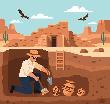
Cue the excavation.
Debugging this thing felt less like programming and more like brushing dust off an ancient ruin. Layers of old logic. Sediment from past updates. Fossils of decisions I barely remember making. And somewhere in that digital dig site, a tiny little gremlin was holding the month hostage.
That’s when I realized:
I’m basically a digital archaeologist.
I don’t just write code — I excavate it.
I dig through forgotten structures, uncover buried assumptions, and occasionally discover that a single stray index can rewrite history.
Today’s artifact?
A stubborn calendar header that refused to leave June.
But the dig was worth it.
Every bug tells a story. Every fix uncovers a fragment of the past. And every once in a while, you dig up something that reminds you why you love this strange craft — because even in the digital world, archaeology is alive and well!

- Rogue
- Aug 5, 2026 |
- Miscellaneous |
- 162
- 0
Cats are strange, noble creatures, each with their own quirks and quiet philosophies. Our household is ruled by a very large yellow‑striped gentleman named Garfield — eighteen pounds of muscle, curiosity, and stubborn independence. I’ve been slowly trying to leash‑train him, and let me tell you, “slowly” is doing a lot of work in that sentence. Still, every morning around 7 a.m., he and I head outside for thirty to forty‑five minutes so he can explore, stretch, and — when the sun cooperates — soak up a little natural vitamin D. It’s good for him, and honestly, good for me too.
Picture this: a warm, slightly misty sixty‑five‑degree morning. Garfield leads the way with the confidence of a cat who believes the world was built for him. Birds chatter overhead, squirrels chase each other in dizzying spirals up and down the trees, and rabbits dart through the yard like tiny, furry shadows. It’s an animated little ecosystem, lively yet calming. The only real challenge is Garfield’s lifelong belief that every critter is a potential snack. Breaking that habit has been… well, let’s just say it’s a work in progress. He was an outdoor cat once, free to do as he pleased, and old instincts die hard.
Around the house are pockets of thick foliage — places I simply can’t fit through. Garfield, however, slips into them like smoke. So I drop his leash, let him pass through on his own, walk around, and pick it up again on the other side. It’s become part of our morning choreography. Other times he stretches out on his belly, perfectly still, watching the world with that intense feline focus. We also have a few old railroad timbers scattered around the yard, remnants from long before we bought the house. They once marked planting beds; now they serve as Garfield’s personal scratching posts, and he treats them with ceremonial reverence.
Another lesson I’m trying to teach him is boundaries — the road in front of the house, the one along the side, and the alley behind us. He’s slowly learning that when I say “no,” I mean it. My late wife taught me something years ago: try to project your thoughts toward the animal. Whether it truly works is hard to say, but I believe it helps. Training a cat requires patience, consistency, and a sense of humor. Thankfully, I seem to be making progress.
The yard offers its own quiet wonders. Bees drift from wildflower to wildflower, landing on tall, slender stalks that bow under their weight. Just before the stalk touches the ground, the bee lifts off again — a tiny, graceful dance repeated all over the yard. Spiders tend their webs, catching breakfast with an efficiency that’s oddly mesmerizing. Garfield ignores the bees and spiders entirely; they’re beneath his notice.
And so this is how I spend the first part of my mornings — walking, watching, and sharing a small ritual with a cat who has become part of the rhythm of my life. It’s relaxing, grounding, and oddly entertaining. If you’ve ever loved a cat, you probably understand. They’re not just pets; they’re family. They depend on us, challenge us, comfort us, and somehow make the world feel a little more alive. Garfield certainly does.

- Rogue
- Aug 7, 2026 |
- Life » Culture & Society |
- 79
- 0
For years I wanted an ebook library that felt fast, clean, and personal — so I built one myself. Rogue’s Ebook Library is the result of countless hours of coding, experimentation, and determination. I built this system because I couldn’t find a library platform that felt right — so I created my own. It became one of the most challenging and rewarding projects of my entire computing journey.
Much of the inspiration comes from the original © FlatPress Blog, created by Edoardo Vacchi (NoWhereMan) and now maintained by Arvid Zimmermann. While FlatPress is a flat‑file system, my home‑grown system uses a MySQL database powered by PDO and Bootstrap 5, expanding its flexibility, structure, and performance for managing ebooks, metadata, and catalog features.
A special thanks goes to my friend and colleague Fred Bonani, whose insight, guidance, and commitment to clean coding practices were invaluable throughout this project.
This library exists because I believe in freedom — freedom of coding, freedom of creativity, and the freedom to explore stories and knowledge. The goal is to provide a clean, organized, and enjoyable place to browse and read our ebooks online or by downloading them for offline reading.
A completely free ebook reader called 'Cool Reader' is provided for you to download and use for offline reading of the ebooks. Link at the bottom of the index page.
My background began in advanced electronics in the U.S. Army, which eventually led to a career in computer technology. My first computer was an 8‑bit Commodore 64, where I learned BASIC programming. Those early lessons grew into PHP, MySQL, Bootstrap, and a lifelong passion for building things from scratch. The learning never stops — and you’re never too old to learn something new.
This space is built for readers, creators, and anyone who enjoys well‑crafted digital tools. I hope you find it useful, intuitive, and enjoyable. If you enjoy ebooks, clean interfaces, or hand‑built software, you’ll feel right at home.
Explore our library here: https://ebooks.trans-galactic.com

- Rogue
- Oct 24, 2026 |
- Life » Daily Moments |
- 19
- 0
Every once in a while a light‑bulb turns on in your head, and a moment of clarity blossoms. This is the story of one of those moments.
In the mid‑sixties, I was learning computer lingo on a Commodore 64. It taught me the basics of programming and gave me a tremendous understanding of bits and bytes — how to manipulate them, how to make them behave, how to bend them toward whatever I wanted to create. But a 1‑megahertz machine with 8‑bit operations and only 38,000 bytes of usable memory eventually became too limiting.
Then came my first real computer, and it carried me much further down the programming road. But I soon realized I didn’t want to spend months learning machine language or diving into full Windows programming. I knew I had to start small and slow. That’s when I found an HTML editor called Site Aid — and that’s where the real story begins.
Site Aid was basic, but it had one feature that changed everything: it could link directly to your browsers and run your code in local mode. That simple loop — write, click, view — became my gateway into the world of HTML and CSS.
Then I discovered something even more powerful. I could visit any website, open View Source, capture its code, paste it into Site Aid, examine it, modify it, and run it locally. Suddenly I wasn’t learning from tutorials — I was learning from real, working websites. I was dissecting them, breaking them, fixing them, understanding them.
That’s when the learning curve stopped being a curve and became a rocket. My understanding grew exponentially, and I was well on my way to building websites of my own.
I soon became aware that some pieces of code inside a website’s source didn’t make sense to me — and some parts didn’t show up at all. Instead, I’d see references to files or functions that lived behind the scenes. That was my first glimpse into the world of scripting: the hidden logic that powered everything you couldn’t see from View Source.
That discovery changed my direction. I realized that HTML and CSS were only the surface layer. The real power lived underneath, in the scripts that executed quietly in the background.
So I began my journey into script writing and manipulation.
I started with JavaScript — executable code that could change a page dynamically, respond to user actions, validate forms, and make websites feel alive. It was my first taste of true interactivity.
Eventually, I found PHP. And that opened an entirely new world. PHP wasn’t just running in the browser; it lived on the server, generating pages, handling data, connecting to databases, and doing things HTML could never dream of. It was the engine behind countless websites, and learning it felt like stepping behind the curtain and finally seeing how the whole show worked.
As I dug deeper into scripting, something shifted. I wasn’t just learning how websites worked anymore — I was learning how to make them work. JavaScript gave me my first taste of interactivity, but PHP was the turning point. Once I understood it, the entire web opened up to me.
That’s when I began building things of my own.
I started experimenting with PHP scripts, learning how to pass data, handle forms, and generate dynamic content. Then I discovered MySQL, and everything clicked. Databases weren’t just storage — they were structure, memory, and logic. They let me build systems instead of pages.
Eventually, I built my own custom PHP/MySQL platform — a full ebook and audiobook library system. It wasn’t something I downloaded or copied. It was something I created piece by piece, learning through trial, error, and persistence. Every feature, every script, every database table was a step forward in my evolution as a developer.
Over time, my tools evolved too. Site Aid had been my teacher, but I eventually outgrew it. I moved to Notepad++, where I learned the power of regex, multi‑file editing, and fast text manipulation. It became my workhorse — the place where I refined manuscripts, cleaned up chapters, and shaped the text that would eventually become audiobooks.
And now, decades after that first spark on the Commodore 64, I find myself exploring modern tools like Zed — editors built for speed, clarity, and the kind of work I do today. Tools that respect how far I’ve come.
My evolution didn’t happen overnight. It happened through curiosity, experimentation, and the willingness to break things just to see how they worked. From bits and bytes to HTML and CSS, from JavaScript to PHP, from simple pages to full systems — every step built on the one before it.
And the journey still isn’t over.
As my coding skills grew, my projects began to expand beyond simple pages and scripts. I wasn’t just building websites anymore — I was building tools, systems, and eventually entire platforms. But something else was happening alongside that growth: my creative world was evolving too.
Writing had always been part of my life, but as my technical abilities matured, I found myself wanting to bring my stories into new formats. That’s when I stepped into the world of audiobooks.
At first, it was just curiosity — a desire to hear my own work spoken aloud. But soon it became a full production pipeline. I learned how to shape text for narration, how to smooth pacing, how to refine punctuation so voices flowed naturally. I discovered text‑to‑speech engines, experimented with different voices, and eventually mastered tools like NaturalReader, Edge TTS, and Audacity.
My workspace evolved with me. I built a split‑screen workflow: Firefox on the left for listening, Explorer on the right for drag‑and‑drop editing. I refined my chapter naming schemes, organized my files, and developed a rhythm that let me move quickly through large manuscripts. Even my tools for comfort evolved — an orthopedic cushion that reduced pain and let me work longer without strain.
And through all of this, my coding skills continued to support my creative work. My custom PHP/MySQL library became the backbone of my audiobook and ebook collection. It wasn’t just a website — it was a personal archive, a system built by my own hands, tailored to my own needs.
The evolution wasn’t just technical. It was personal. I had gone from manipulating bits and bytes on a Commodore 64, to dissecting websites in Site Aid, to building full systems, to producing audiobooks, to refining entire novels. Every step built on the last. Every tool, every script, every editor became part of a larger journey.
And even now, the evolution continues. Modern tools like Zed offer new ways to work, new ways to create, new ways to refine. They don’t replace the past — they build on it. They’re the next chapter in a story that started decades ago with a blinking cursor and a desire to understand how things worked.
Over the years, my tools changed, my projects changed, and even the way I worked changed. But the one thing that never changed was the spark that started it all — the desire to understand how things worked, and then to make them work for me.
From the Commodore 64 to Site Aid, from JavaScript to PHP, from simple pages to full systems, from text files to audiobooks, every step was part of a long, steady evolution. I didn’t plan it. I didn’t map it out. I just followed the trail of curiosity wherever it led.
And every time I thought I had reached the end of that trail, something new appeared — a new tool, a new idea, a new challenge. Modern editors like Zed aren’t just conveniences; they’re reminders that the journey isn’t over. There’s always another layer to peel back, another skill to learn, another way to refine the work I love doing.
That’s the moment of clarity — the light‑bulb that turned on.
My evolution wasn’t a single leap. It was a lifetime of small steps, each one building on the last. And when I look back at where I started, and where I am now, I can see the whole arc clearly. Not as a straight line, but as a story — one that’s still being written.


- An Evolution Story Oct 23, 2026


Cat Tales
Aug 04, 2026
Views: 162
Likes: 1

Live And Let Live
Jun 04, 2026
Views: 133
Likes: 32

Evolution Of This Blog
Jun 02, 2026
Views: 130
Likes: 19

Earth Tribute
Jun 03, 2026
Views: 118
Likes: 12
An Unexpexted Adventure
Jul 03, 2026
Views: 115
Likes: 4

Felix
on For Your Brain
Jul 10, 2026
Rebecca
on Digital Archaeologist
Jul 10, 2026
Nathan
on An Unexpexted Adventure
Jul 10, 2026
Rogue
on Misfits
Jun 23, 2026
Rogue
on Rogues Blog
Jun 23, 2026